
A team from Aqlara Ciclo Integral del Agua and the Research Institute of Water and Environmental Engineering (IIAMA) of the Universitat Politècnica de València has published a technical article in TecnoAqua on the bacteria involved in biological phosphorus removal at a full-scale, operating treatment plant. The authors are Óscar Mateo Llosá, Carmen Merediz Miranda and Javier Marco Vila, of Aqlara, and Andrés Zornoza Zornoza and José Luis Alonso Molina, of IIAMA.
Enhanced biological phosphorus removal (EBPR) alternates an anaerobic, oxygen-free phase with an aerobic or anoxic one in the reactor to favour PAOs, bacteria that store phosphorus as polyphosphate and so remove it from the water. They compete with GAOs, which feed on the same organic matter in the anaerobic phase but accumulate glycogen and do not remove phosphorus.
The plant studied is an extended aeration treatment plant in the province of Ciudad Real, with a three-chamber anaerobic selector and two carousel reactors in parallel, designed for 1,400 m³ a day and 3,733 population equivalent. Between January 2024 and January 2025, 10 activated sludge samples were taken, sequenced (16S rRNA gene metabarcoding) and classified with the MiDAS v5.3 database.
According to the article, 198 OTUs (operational taxonomic units) associated with PAOs and GAOs were found: 105 PAO-related and 93 GAO-related. The most abundant genera were GAOs, mainly Ca. Competibacter and Defluviicoccus, at around 1-3% relative abundance; among the PAOs, Ca. Phosphoribacter stood out (0.25-0.81%). Over the year the community alternated between phases of change and periods of transient stability.
The practical reading the authors propose is that a high abundance of GAOs does not on its own indicate that the process is failing: what matters is the balance of the whole community, interpreted together with operating data. They put forward metabarcoding as a complement to physico-chemical data for monitoring the process, not as a substitute.
The authors frame the work within Directive (EU) 2024/3019, which strengthens nutrient reduction at treatment plants and whose cost for Spain was summarised in the article on the iAgua Data report.
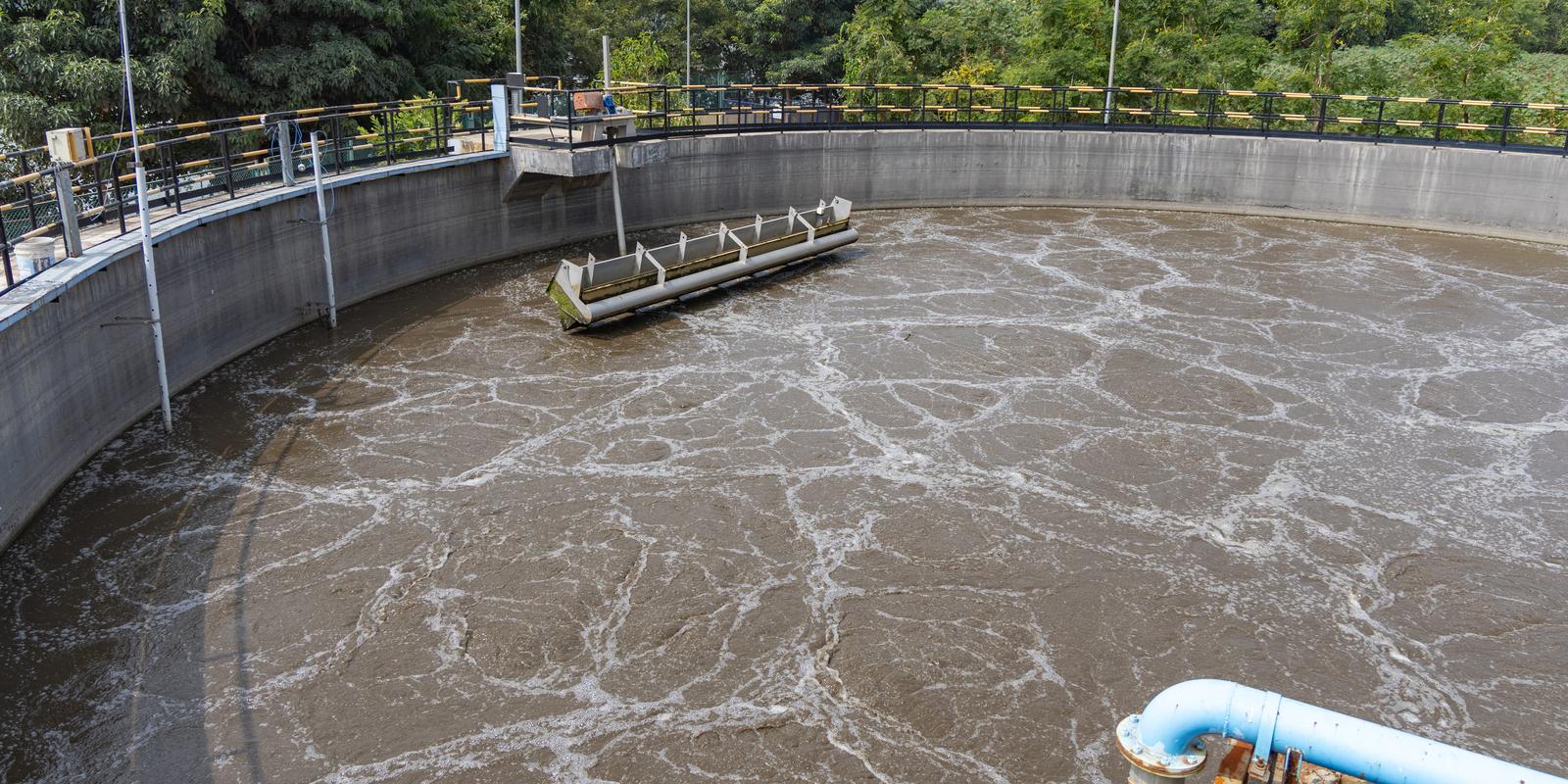
Sources: Ó. Mateo Llosá, C. Merediz Miranda, J. Marco Vila, A. Zornoza Zornoza and J. L. Alonso Molina, “PAO y GAO en EBPR: dinámica microbiana mediante metabarcoding” (PAO and GAO in EBPR: microbial dynamics by metabarcoding), TecnoAqua, 15 September 2026 (full article PDF). Image: activated sludge aeration tank at a treatment plant in Bengaluru (India). Vraj Acharya, WELL Labs, CC BY-SA 4.0, via Wikimedia Commons (cropped).


