Xylem Vue, Xylem’s digital platform, has published an article in the Spanish water trade press (iAgua on 15 October and TecnoAqua on the 21st) on applying agentic artificial intelligence to the operation of water utilities. In agentic AI, an agent architecture orchestrates AI models and makes them accessible in natural language. Its starting point is the set of challenges the company sees in the sector: ageing infrastructure, insufficient investment to renew and expand networks, a generation of professionals nearing retirement, climate volatility and pressure for more resilient, transparent and efficient services.
According to Jaime Barba, head of Xylem Vue, “we are not replacing anything that already works; we are opening a second front on the challenges that until now required human judgement alone”. The article sets out three uses for that second front:
- Crisis response. A severe incident affects SCADA, GIS, the computerised maintenance management system (CMMS), alarms and emergency protocols all at once, and until now operators have had to piece that information together under pressure. With an agent architecture, according to Xylem, operators ask in natural language and get an answer that draws on all those systems, with the reasoning traced step by step, while keeping control of any consequential action. Contingency plans can be consulted in real time.
- Regulatory compliance and audit. Reporting obligations are multiplying: the EU AI Act, the EPA and CISA cybersecurity frameworks in the United States, and sector rules on water quality and cybersecurity. “Every step of the agent’s reasoning is logged: which tools it consulted, which data it used, which recommendation it made, what a human approved,” says David Torres, AI Lead at Xylem Vue.
- Knowledge. An agent connected to the utility’s knowledge base can propose the action an experienced operator would propose and explain why. According to the company, this shortens the learning curve for new operators and cushions the loss of knowledge as staff retire. Also according to Xylem, that knowledge remains the utility’s: it is not handed over to the technology provider or used to train third-party models.
The company places governance in an intermediate layer between the operator, the language model and the utility’s systems (SCADA, asset management, work orders), which it calls a “water-specific harness”. In practice, according to the article, this means permissions by asset, zone and role; separating read-only queries from actions that change the system; mandatory human approval for consequential operations; a full trace of every interaction; and the ability to re-evaluate the system when a prompt, a tool or a data source changes.
The article cites Xylem Vue’s report Water Technology Trends.
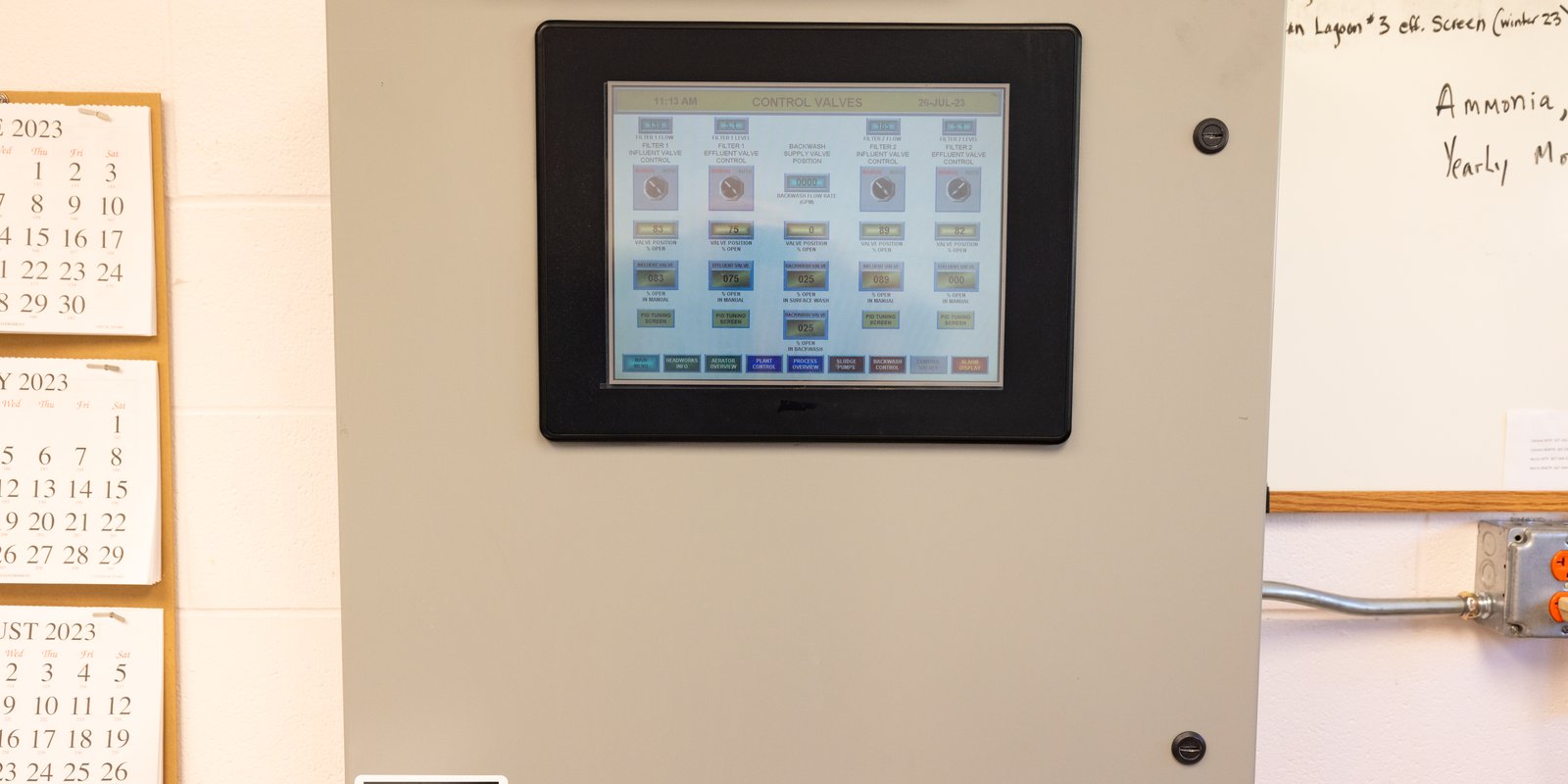
Sources: TecnoAqua, 21 October 2026, and iAgua, 15 October 2026 (both in Spanish). Image: SCADA control screen at the Canyon Village wastewater treatment plant (Yellowstone National Park, United States). Yellowstone National Park (NPS), public domain, via Wikimedia Commons (cropped).