On 25 October, the Extra Infraestructuras supplement of El País ran a feature on the shortfall in investment in Spain’s water infrastructure, against the backdrop of the 2024 DANA floods and the storm of mid-October. The SEOPAN investment figures it cites come from the report “Strategy and investments for water efficiency and resilience in Spain”, presented on 26 November 2025 by SEOPAN (the Spanish association of infrastructure construction and concession companies) and the engineering firm TYPSA. The report puts the investment needed over the next ten years at 103,824 million euros, around 10,400 million a year.
According to SEOPAN’s press release, the figure breaks down as follows:
- 84,644 million to meet water demand and environmental objectives, in response to scarcity. Of this, 59,183 million is for the urban water cycle (supply, sanitation, wastewater treatment and networks, with a minimum renewal rate of 1% a year); 10,933 million for desalination, water reuse, irrigation and aquifers; 7,647 million for a National Water Agreement, including new inter-basin transfers and the assessment of new regulation needs through dams; 4,112 million for environmental objectives in the public water domain; and 2,769 million for monitoring the water cycle and modernising the automatic hydrological information systems (SAIH).
- 19,180 million to reduce flood risk: 9,443 million for sustainable urban drainage, storm tanks and flood attenuation; 4,644 million to bring dams into line with safety standards (spillways, outlet works and monitoring); 3,550 million for structural measures; and 1,542 million for green infrastructure.
- Within the total, an extraordinary programme of 4,052 million in the Mediterranean basins, with new dams, or alternatives to them, on the lower Turia and the lower Júcar.
The feature points to delivery as the problem. María Moreno, managing director of SEOPAN, gives two figures: only 30% or less of the works planned in the river basin management plans get built, and between 2009 and 2025 annual public tendering for water works fell by 38%, from 5,350 to 3,309 million euros. Concha Santos, chair of ANCI, the association of unlisted construction companies, calls for maintaining dams, whose average age is over 50 years, and renewing water supply networks, where losses reach 19%, or up to 25%, of the total. And Gracia Ballesteros, head of Studies and Projects at Acuamed, said at an event of the Spanish Desalination and Reuse Association (AEDyR) in early October that obtaining environmental approval can take up to 22 months under the simplified procedure and 28 under the standard one.
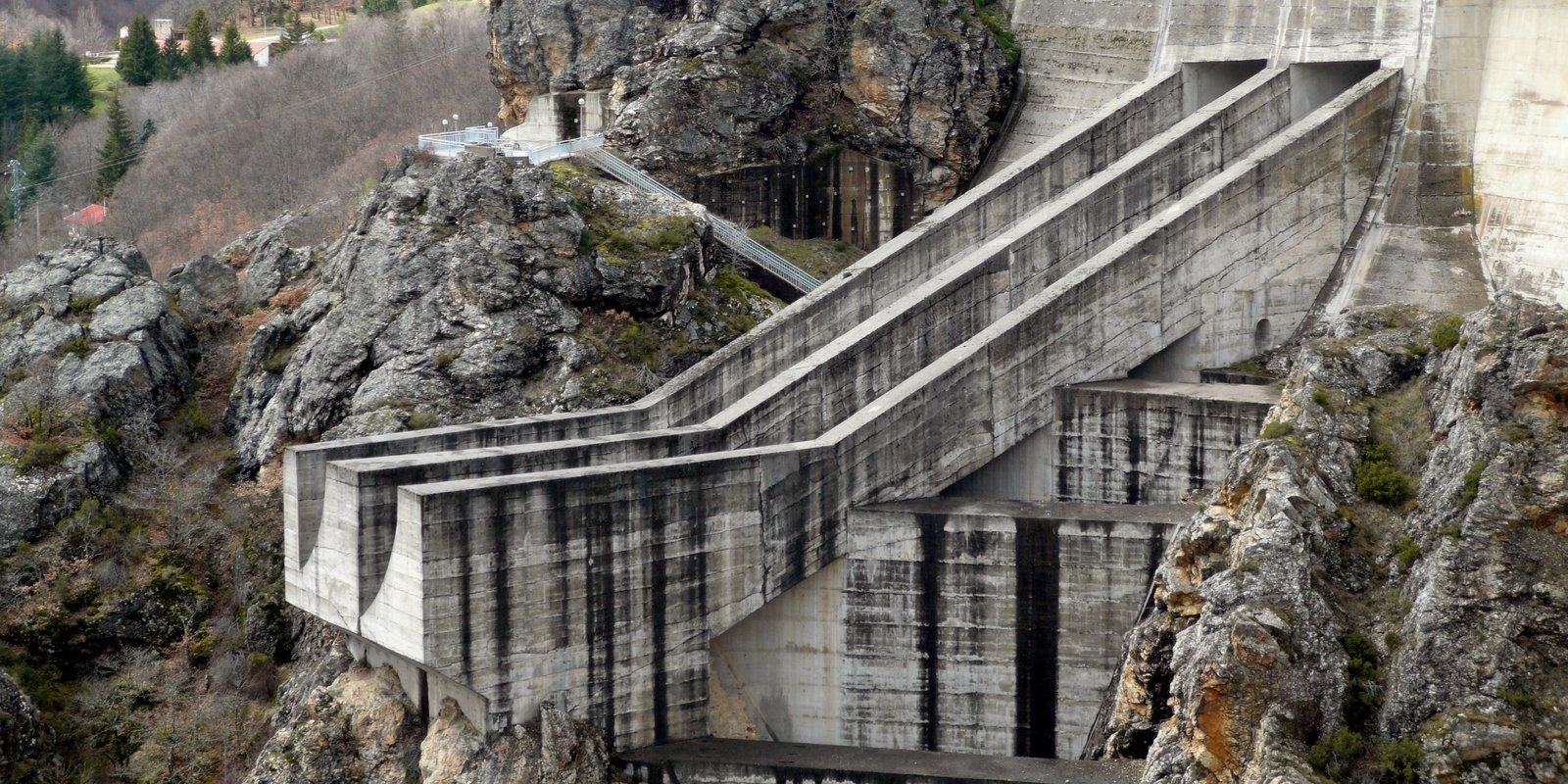
Sources: El País, “Urge renovar las redes de agua”, 25 October 2026, and SEOPAN, press release of 26 November 2025 (both in Spanish). Image: side spillway of the Riaño dam (León). Felipe Gabaldón, CC BY 2.0, via Wikimedia Commons (cropped).