The Catalan Water Services Association (ASAC) held its 15th Technical Conference in Banyoles on 4 November, entitled “The road to the water transition in Catalonia: are we ready?”, which was attended by more than a hundred organisations and professionals from the sector. One of its conclusions was the need to make greater use of reclaimed water as a resource for Catalonia’s water security. ASAC brings together public, private and mixed-capital water supply and sanitation companies that serve 90% of the Catalan population.
The Catalan Government’s Director-General for the Water Transition, Jordi Agustí, explained that the future Water Transition Act should drive a change of model based on six pillars: guaranteed availability of resources, efficient demand management, financing, protection of water resources, transparency and public involvement. He argued that reclaimed water should be a structural part of the model, as a local resource. On financing, he warned that “we cannot expect to solve all the challenges of the water transition with water rates and the water levy alone”, and proposed combining tariffs, taxes, grants and public-private partnership. According to Agustí, the drafting of the text is finished; the preliminary bill document still has to be prepared and its formal procedure started, including public consultation periods.
ASAC’s president, Ignacio Escudero, called for planning that takes into account the specific features of each territory (“there is no single solution that works for every territory”) and noted that the change requires clear governance, administrative agility, regulatory stability and financially sustainable services. Javier Martín Vide, director of the Fabra Observatory and Professor Emeritus of Physical Geography at the University of Barcelona, warned that “the Mediterranean basin and much of the Iberian Peninsula cannot expect rainfall to increase in the future”. Francisco Javier Sánchez, Deputy Director-General for Water Protection and Risk Management at the Spanish Ministry for the Ecological Transition and the Demographic Challenge, noted that Catalonia is one of the regions that have made most use of Spain’s PERTE strategic programme for the digitalisation of the water cycle.
The conference included two round tables. The first reviewed the progress made by the sector and the outstanding challenges: solidarity between river basins, the use of reclaimed water and the modernisation of wastewater treatment plants. In the second, representatives of agriculture, industry and the hospitality sector explained how water availability shapes their activity.
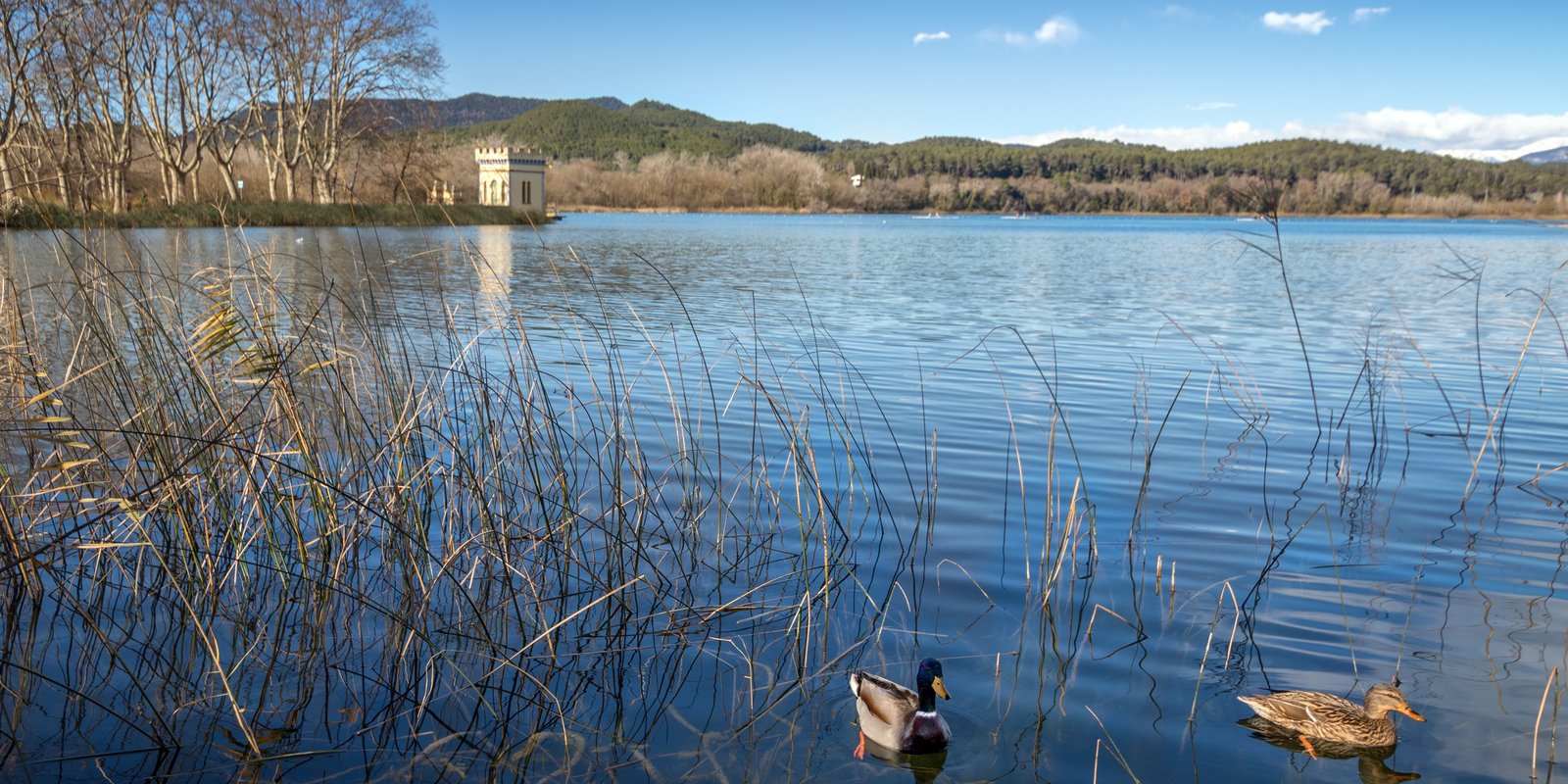
Sources: ASAC, 5 November 2026 (in Catalan), and IndustriAmbiente, 5 November 2026 (in Spanish). Image: Lake Banyoles (Girona, Spain). Mikipons, CC BY-SA 4.0, via Wikimedia Commons (cropped).