The Spanish Hydrogen Association (AeH2) has published its analysis of the AeH2 2026 Project Census, compiled from data provided by its members. This fourth edition lists 312 projects from 67 members, with estimated investment of more than €25 billion, of which more than €3 billion comes from public funding.
By maturity, the census counts 102 research projects (TRL 3-4), 109 demonstration projects (TRL 5-8) and 101 commercial projects. If all were built, the commercial projects with associated electrolysis would add more than 13.7 GW of capacity and 1.4 million tonnes of hydrogen a year, although around 55% are still at a preliminary stage (concept, feasibility study or undefined).
In 2026, two projects with 400 MW of electrolysis have taken their final investment decision (FID). Another 11, with 930 MW, expect to take it before the end of the year, and a further 15, with 2,362 MW, in 2027. According to IndustriAmbiente, AeH2 president Javier Brey said the 2026 data show a more mature portfolio, with projects moving towards FID, although challenges remain that may affect the pace of delivery.
The portfolio is smaller than last year’s: the 2025 census had 399 projects, 145 of them commercial, and the 2026 census has 312 and 101. Part of the difference is methodological, as research and demonstration projects completed before 1 January 2026 move to a separate annex. For commercial projects, AeH2 attributes the drop mainly to projects that were at an early stage, against a background of economic and regulatory uncertainty. The electrolysis capacity that developers expect to have in operation by 2030 falls from 13.3 GW in the 2025 census to 7 GW: below the 12 GW target in the update of Spain’s National Integrated Energy and Climate Plan (PNIEC) sent to the European Commission in 2024, and above the 4 GW of the 2020 Hydrogen Roadmap.
According to developers of commercial projects, the regulatory framework is the main barrier in 2026; in 2024 and 2025 it ranked third. Practically all the organisations consulted have seen delays or cancellations in one or more of their projects. The report notes that the delay of more than a year in transposing the consumption targets for renewable fuels of non-biological origin (RFNBO) in transport, set by the Renewable Energy Directive (RED III), held up several projects until Royal Decree 611/2026 of 22 July was published. Other barriers include electricity, hydrogen buyers (offtakers), access to public funding and equipment supply.
Water has its own section. Most developers rate it as “of little or no concern”, but the report lists several challenges: availability depends on the site and is more critical in some areas where renewable generation is concentrated; the lack of new water concessions forces developers to seek changes of use of existing ones; procedures before the river basin authorities (confederaciones hidrográficas) apply different criteria and timescales; there are no clear rules on the use of reclaimed water; and there is no guarantee of access to water during droughts. Members’ proposals include clear rules for concessions, including reclaimed water, standardised procedures for new concessions and changes of use, and more investment in water infrastructure.
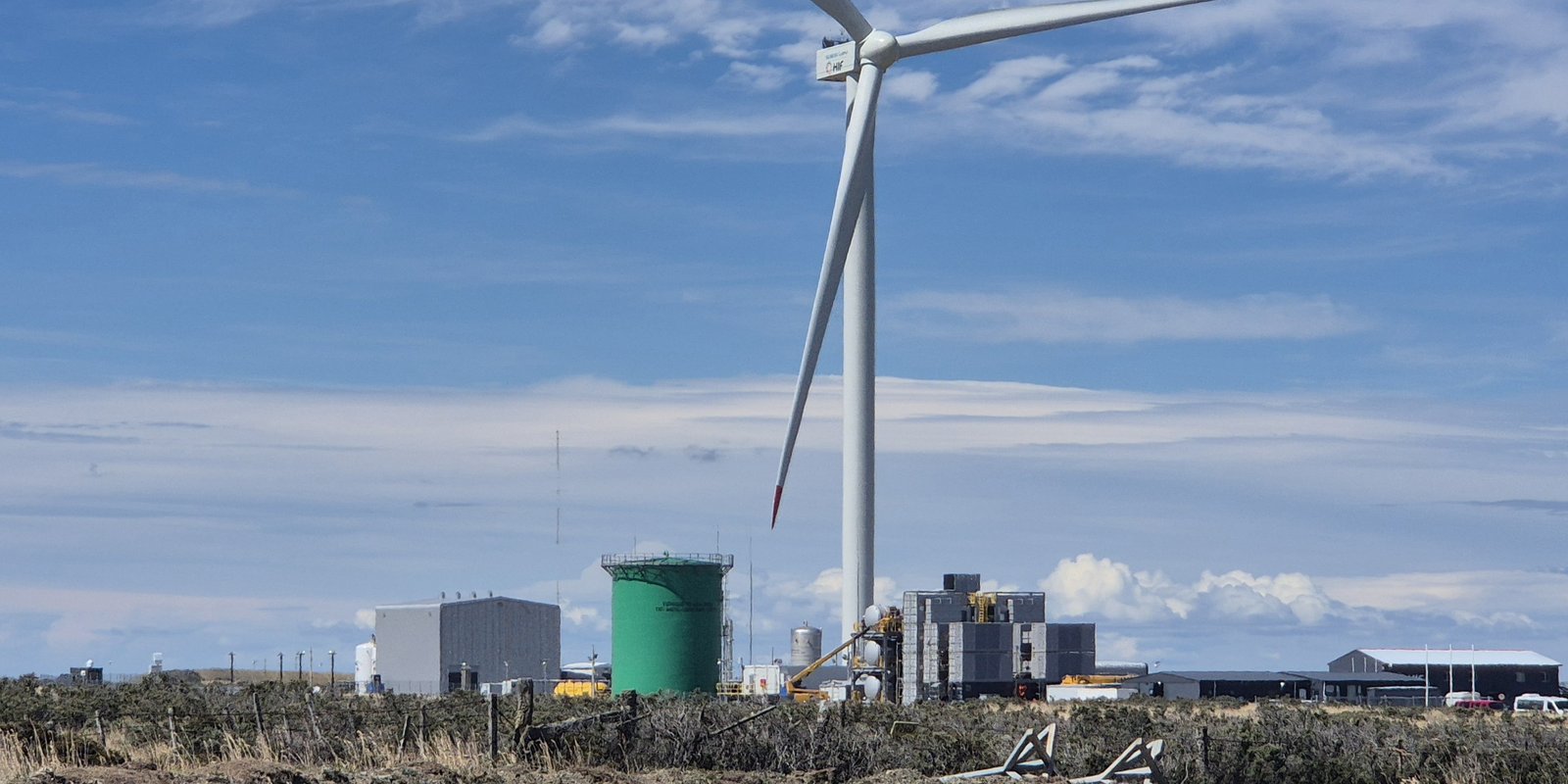
Sources: AeH2, “Análisis del Censo de Proyectos AeH2 2026”, October 2026, and IndustriAmbiente, 26 October 2026 (both in Spanish). Image: Haru Oni renewable hydrogen and synthetic fuels pilot plant, run by HIF Global, in Punta Arenas (Chile). Ildottoreverde, CC BY-SA 4.0, via Wikimedia Commons (cropped).