
On 7 October the Spanish Desalination and Reuse Association (AEDyR) brought together public authorities, companies, financial institutions and water users in Madrid, at the Association of Civil Engineers (Colegio de Ingenieros de Caminos, Canales y Puertos), for the conference “Financiando el Agua del Futuro: Planes, Herramientas y Modelos de Inversión” (Financing the Water of the Future: Plans, Tools and Investment Models).
According to the summary published in TecnoAqua, one of the main conclusions was that water infrastructure needs long-term planning, independent of electoral cycles, and a stable framework so that investment arrives on time. Participants agreed that, in many cases, the problem is not so much a lack of money as a lack of projects mature enough to absorb it.
The president of AEDyR, Belén Gutiérrez, argued that “water infrastructure is national infrastructure and must transcend electoral cycles”.
The conference was opened by Juan Luis Gimeno Chocarro, Director-General for Economic and Commercial Intelligence at the Ministry of Economy, Trade and Business. He warned that technology is not enough to compete outside Spain: water projects require large amounts of capital, take a long time to mature and need financial structures able to manage a range of risks. He argued that public instruments should complement private finance, not replace it, and urged companies to involve the institutions from the start of each project. He cited Spain’s Fund for the Internationalisation of Companies (FIEM), export credit insurance from CESCE and financing from COFIDES, and the option of adding them to European and international programmes such as the EU’s Global Gateway.
Points raised in the five panel discussions included:
- Barriers. SEOPAN (the Spanish association of construction and infrastructure concession companies) called for an update of the public works framework and faster procedures; ATL (Ens d’Abastament d’Aigua Ter-Llobregat) identified administrative procedures as one of the biggest bottlenecks, and Acuamed’s representative warned of long environmental and sectoral timescales.
- Public-private partnership. The panel, with Acciona, Almar Water Solutions, Aqualia and GS Inima, argued that what is needed is long contracts, real demand and legal certainty, and an allocation in which each risk is borne by whoever is best placed to manage it, without loading them all onto the private partner.
- Internationalisation. Representatives of the ministry, Spain’s official credit institute (ICO), CESCE, the export and investment agency ICEX and COFIDES said the tools exist; the hard part is making sure companies, especially SMEs, know about them and apply early, even before tendering.
- Banks. For the representatives of BBVA, CaixaBank and Santander, technical viability alone does not make a project bankable: what counts, among other factors, is stable revenue, the sponsor’s solvency, the contract, risk management, legal certainty and sustainability.
- Demand. At the closing panel, representatives of irrigation, industry and urban water argued that demand should drive investment and that needs should be identified before a way of financing them comes up.
In the conclusions, Gutiérrez warned: “Water security is not built when the next drought arrives; by then we know we are already late. It is built beforehand, by planning and investing”.
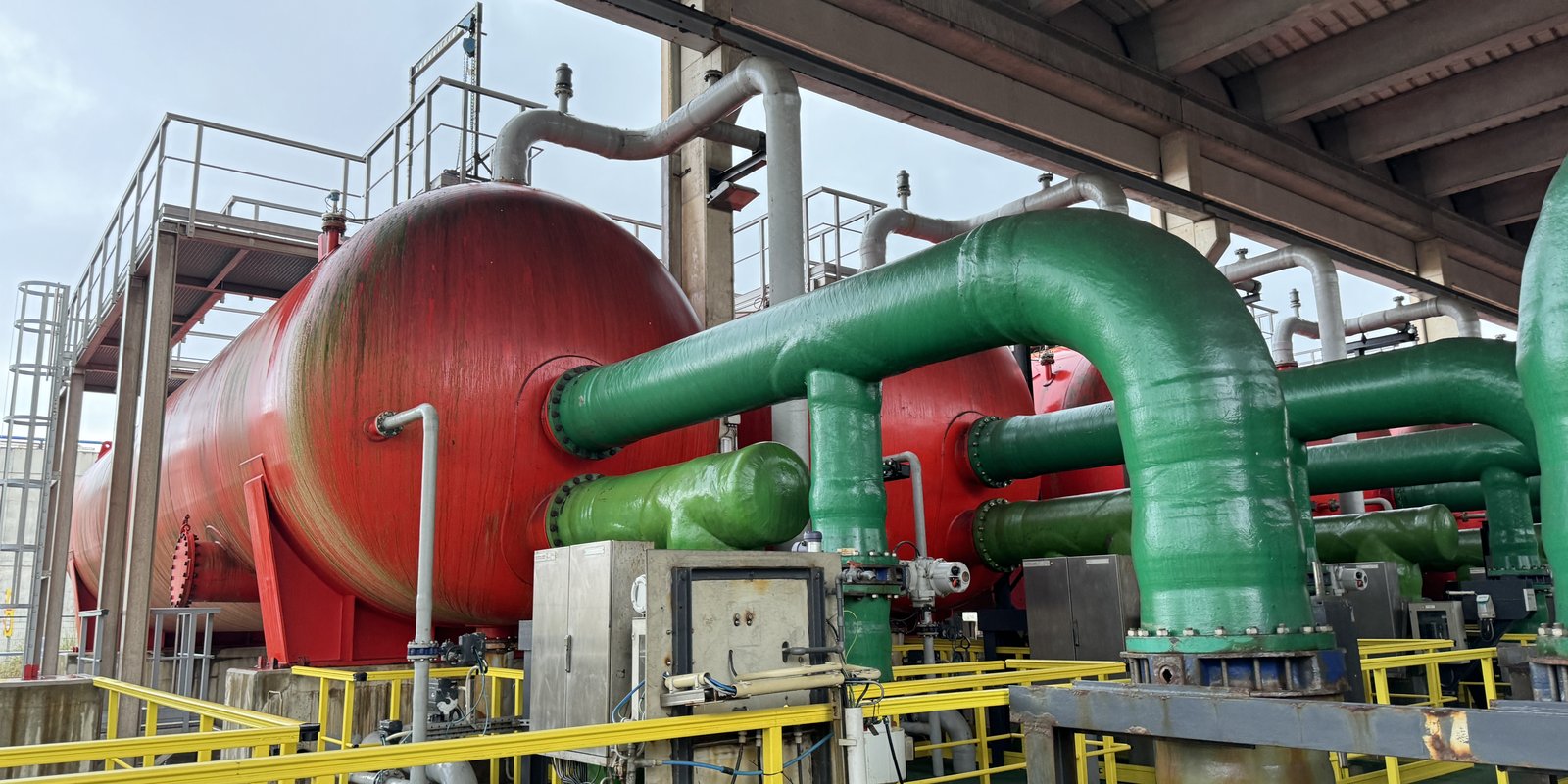
Sources: TecnoAqua, 9 October 2026, and AEDyR, conference page (date and venue). Image: El Prat de Llobregat desalination plant (Barcelona), 14 May 2024. Govern de Catalunya, govern.cat reuse licence, via Wikimedia Commons (cropped).


