Provincial councils, public water operators and wastewater treatment specialists met in Seville on 22 October to agree on the contents of a guide to the design, permitting and implementation of sewerage and wastewater treatment systems for urban agglomerations of fewer than 5,000 population equivalent (p.e.). The guide is being promoted by the Spanish Association of Public Water Supply and Sanitation Operators (AEOPAS) and the Andalusian Fund of Municipalities for International Solidarity (FAMSI), as part of the European project NOPLANETB. The meeting took place at the Casa de la Provincia, hosted by the Provincial Council of Seville, both in person and online.
The session was opened by Gonzalo Domínguez, the Seville Provincial Council member responsible for supra-municipal public services; Manuel Redaño, managing director of FAMSI; and Jaime Morell, secretary general of AEOPAS. All three agreed that the wastewater treatment still pending in Spain is concentrated in small, scattered settlements, which have the fewest technical staff and the least financial capacity.
The discussion started from more than a hundred suggestions on the guide’s table of contents, sent between February and March by 37 professionals from Spain and other countries. The guide’s co-authors, Juan José Salas and Pedro Martín de la Vega, head of Wastewater Treatment Services at Promedio (Provincial Council of Badajoz), went through them section by section: inlet works, preliminary treatment and technology selection, sludge management, on-site treatment, discharge permits, the behaviour of sewer networks during rainfall events, construction and operating costs, and digitalisation.
Participants included the provincial councils of Seville, Jaén and Granada; Promedio (Provincial Council of Badajoz); MásMedio (Provincial Council of Cáceres); Aguas Sierra de Cádiz; Galasa (Gestión de Aguas del Levante Almeriense); MARE (a public company of the Government of Cantabria); FAMSI and AEOPAS, as well as independent experts.
Participants stressed three ideas:
- Choose solutions suited to the scale of each settlement that can be operated with the resources available.
- Know the full cost of the facilities over their service life.
- Anticipate permitting requirements, as regulatory demands grow with Royal Decree 665/2023 and the new European directive on urban wastewater treatment. According to AEOPAS, that directive, (EU) 2024/3019, extends the secondary treatment requirement to agglomerations from 1,000 p.e.
The organisations also committed to providing data for the cost study the guide will include. The authors will write the final text based on the conclusions of the meeting. The guide will be presented in February 2027 at two events, at the provincial councils of Seville and Jaén, and will be available as a free download on the AEOPAS website.
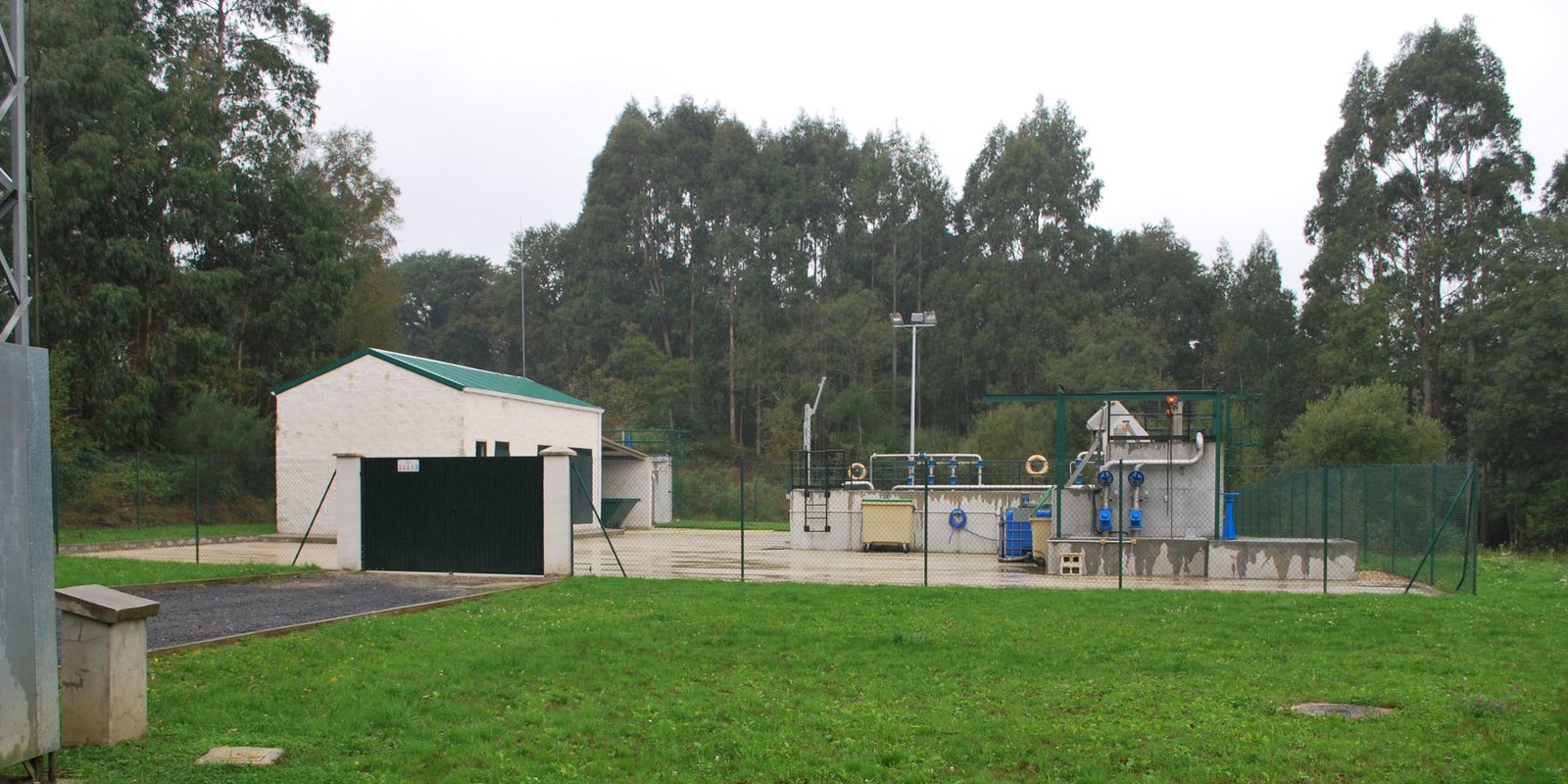
Sources: TecnoAqua, 24 October 2026, and AEOPAS, project page (both in Spanish). Image: Curtis wastewater treatment plant (A Coruña, Spain). Nemigo, CC0, via Wikimedia Commons (cropped).