At its annual general meeting on 14 October, the Spanish Association of Water Technology Companies (Asagua) urged public authorities to change course on urban water services: to move from announcements to delivery, with long-term planning, stable funding and public procurement that responds to the sector’s real needs.
The association puts the accumulated investment shortfall in urban water services at more than 35 billion euros and refers to estimated needs of 100 billion euros over the next decade. In its view, the problems of the water sector are no longer temporary but structural: years without sustained investment, and insufficient delivery of budgeted projects, have gradually worn down an essential service. It therefore asks for plans to become multi-year, ring-fenced commitments, with mature projects and agile procurement procedures.
Asagua sets out eight priority measures:
- Make investment a binding multi-year commitment, prioritising network renewal, sewerage and wastewater treatment, with stable operation and maintenance budgets.
- Reorganise governance with a single regulator to set standards, transparency and tariff criteria.
- Align tariffs with cost recovery, including the cost of initial infrastructure, which in the association’s view the Water Framework Directive requires.
- Reform procurement so that the technical proposal carries the weight it should, with technical thresholds, rigorous treatment of abnormally low bids and formulas that discourage excessively low bids.
- Restore the economic balance of contracts with effective price revision mechanisms, including for service contracts, that reflect the reality of energy costs.
- Make public-private partnership workable to speed up investment when budgets fall short, adapting the regulatory framework that currently limits it.
- Plan resilience to droughts and floods on the basis of technical criteria, combining conventional and non-conventional water resources.
- Promote digitalisation, R&D and innovation to improve efficiency, leakage control and quality.
“As long as more than a third of the budget is left unspent in key spending areas, timescales will keep stretching, breaches of obligations will become chronic and water infrastructure assets will keep losing value year after year,” the association warns, calling for water to be recognised as strategic infrastructure and funded as such.
Long-term planning and the need for mature projects were also at the centre of the AEDyR conference on financing held on 7 October.
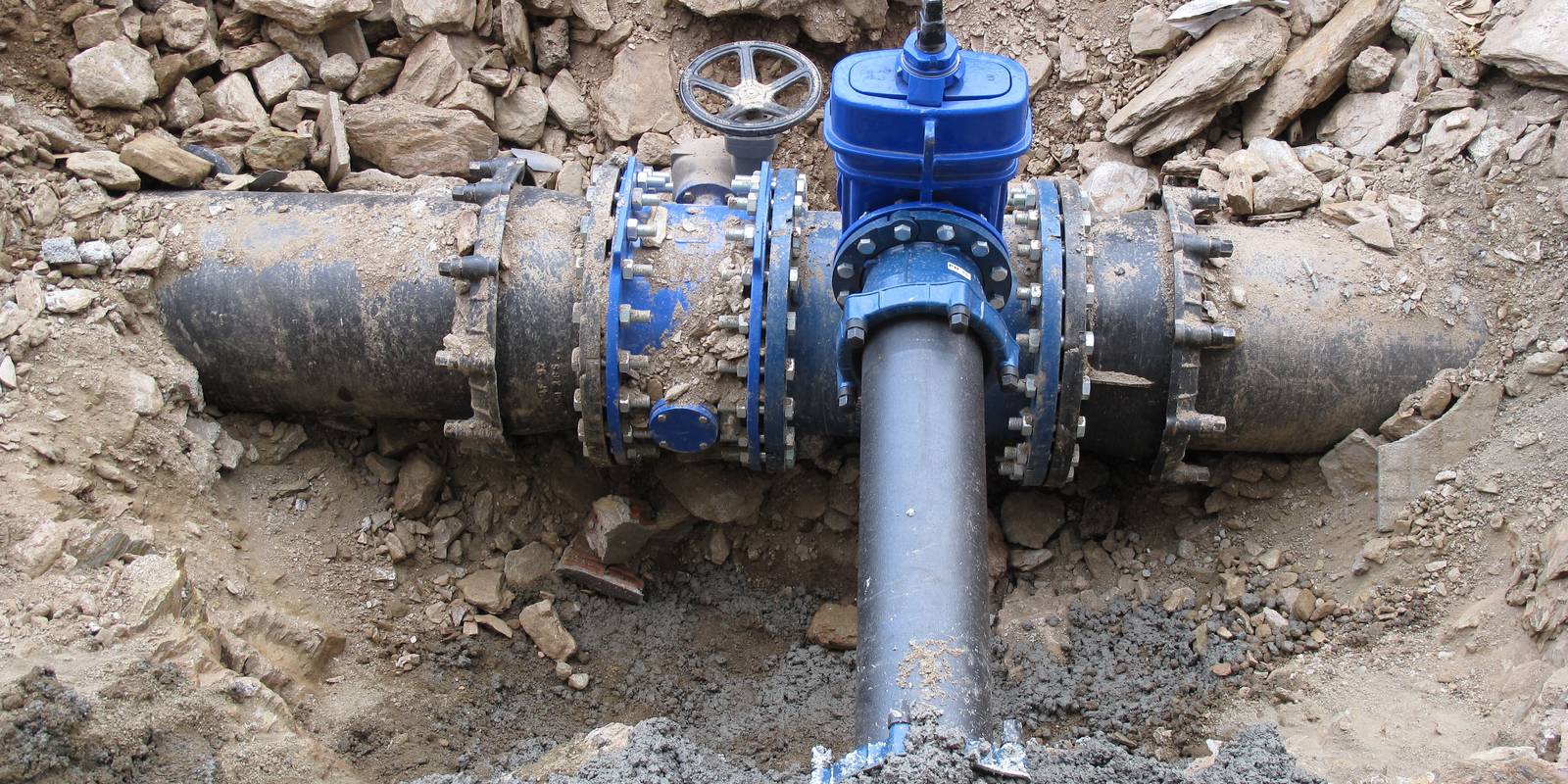
Sources: TecnoAqua, 15 October 2026, and IndustriAmbiente (date of the meeting), 14 October 2026. Image: water pipe with gate valves on a construction site in Santiago de Compostela, 2009. Luis Miguel Bugallo Sánchez, public domain, via Wikimedia Commons (cropped).